Gaurav Kumar
Principal Architect – Data & AI
Designing and building production-grade enterprise AI systems built on robust data platforms and governed agent workflows.
Principal Architect at Valtech
Experience across Samsung, Dell & Accenture
Stanford AI Program • TOGAF® 10 Practitioner • Author • arXiv Researcher
About
Architecting Intelligent
Systems at Scale

I design and build AI systems that operate reliably in real-world environments — spanning data infrastructure, machine learning pipelines, and agent-based workflows.
As Principal Architect at Valtech, I lead end-to-end architecture for production-grade AI solutions — integrating data platforms, orchestration layers, and governance controls into cohesive systems aligned with enterprise standards.
My experience spans Samsung R&D, Dell Technologies, Accenture, and Valtech across multiple regions. From enterprise Java systems and distributed cloud architectures on AWS, Azure, and GCP to today's agent-based AI platforms, each phase has deepened my focus on systems that are scalable, observable, and built for longevity.
Alongside architectural practice, I research and write on structured reasoning in AI systems. My arXiv paper on Model-First Reasoning explores reducing hallucinations through explicit problem modeling, and my book Evolutionary Mind examines the cognitive foundations of artificial intelligence through the lens of philosophy and cognitive science.
My work sits at the intersection of distributed systems engineering and modern AI — bringing architectural discipline to rapidly evolving intelligent technologies.
What I Do
Areas of Expertise
End-to-end architecture for AI systems — from data foundations to governed, production-scale intelligent workflows.
AI Systems Architecture
Designing scalable AI systems that integrate data infrastructure, model architectures, and orchestration layers into cohesive production platforms.
- •Model lifecycle management and production inference architecture
- •Evaluation frameworks for reliability, grounding, and drift
- •Observability across cost, latency, and performance
- •Hybrid AI systems combining predictive and generative models
The objective is not experimentation — it is repeatable, production-grade intelligence.
Data & Intelligence Infrastructure
Architecting governed data platforms that serve as the foundation for modern AI systems.
- •Lakehouse and real-time streaming architectures
- •Vector and hybrid retrieval infrastructure
- •Embedding pipelines and semantic integration
- •Data lineage, ownership models, and lifecycle controls
Reliable AI begins with disciplined data systems.
Generative AI & Agent-Based Systems
Designing retrieval-augmented and agent-based architectures that move beyond simple chat interfaces into structured, multi-step workflows.
- •Tool-integrated agent orchestration
- •Explicit state management and workflow boundaries
- •Bounded autonomy with human oversight where required
- •Evaluation layers embedded within agent execution
Autonomy is engineered deliberately — measurable, controllable, and aligned with risk tolerance.
AI Platform Architecture
Defining shared AI capability layers that enable consistent and secure AI development across teams.
- •Model gateway and routing layers
- •Reusable orchestration and retrieval services
- •Centralized evaluation and monitoring infrastructure
- •Standardized patterns for secure AI deployment
Platform thinking reduces duplication and increases architectural integrity.
Governance, Risk & Standards
Establishing AI architecture standards aligned with enterprise governance principles.
- •Reference architectures and design standards
- •Model risk classification and lifecycle controls
- •Policy enforcement and auditability mechanisms
- •Governance frameworks enabling responsible AI adoption
Governance is not a constraint — it is what enables scale.
Credentials
Experience &
Credentials
Professional Experience
My career spans engineering, cloud-native architecture, and AI systems design across global technology and consulting organizations.
Today, as Principal Architect – Data & AI at Valtech (Germany), I lead the design of production-grade AI systems integrating data platforms, agent-based workflows, and governance mechanisms aligned with enterprise architecture standards.
Previously across Samsung, Dell, Accenture, and Valtech, I worked across India, the United States, Australia, Canada, and Germany — building distributed systems, cloud-native platforms, and large-scale data architectures that now underpin intelligent systems initiatives.
Engineering foundations → Cloud-native architecture → Enterprise AI systems.
Education
Stanford University
AI Professional Program (School of Engineering)
University of Oxford
AI Foundations for Business (Saïd Business School)
University of Pennsylvania
AI for Business Specialization (Wharton / Penn Engineering)
Dr. A.P.J. Abdul Kalam Technical University
B.Tech, Computer Science (Honours)
Certifications & Professional Credentials
Architecture & Cloud
TOGAF® 10 Practitioner
The Open Group
Professional Cloud Architect
Solutions Architect
AWS
These credentials reflect enterprise architecture governance and multi-cloud platform expertise.
AI & Machine Learning
Professional Machine Learning Engineer
Azure Data Scientist Associate
Microsoft
Focused on scalable model systems, production ML workflows, and applied AI engineering.
AI Leadership Credentials
AI Transformation Leader
Microsoft
AI Business Professional
Microsoft
Generative AI Leader
These certifications reflect strategic alignment with enterprise AI adoption and transformation frameworks.
Platform & Domain Architecture
Composable Commerce Architect
commercetools
Experience with modular, API-first platform ecosystems supporting modern digital architectures.
Professional Memberships
Association for the Advancement of Artificial Intelligence (AAAI)
Association of Enterprise Architects
MACH Alliance
Thought Leadership
Writing & Research
I publish and write on the reliability and structure of modern AI systems — exploring how intelligent behavior can be engineered, evaluated, and governed in real-world environments.
My work spans both applied architecture and foundational inquiry, examining how reasoning, representation, and system design intersect in contemporary AI.
Book
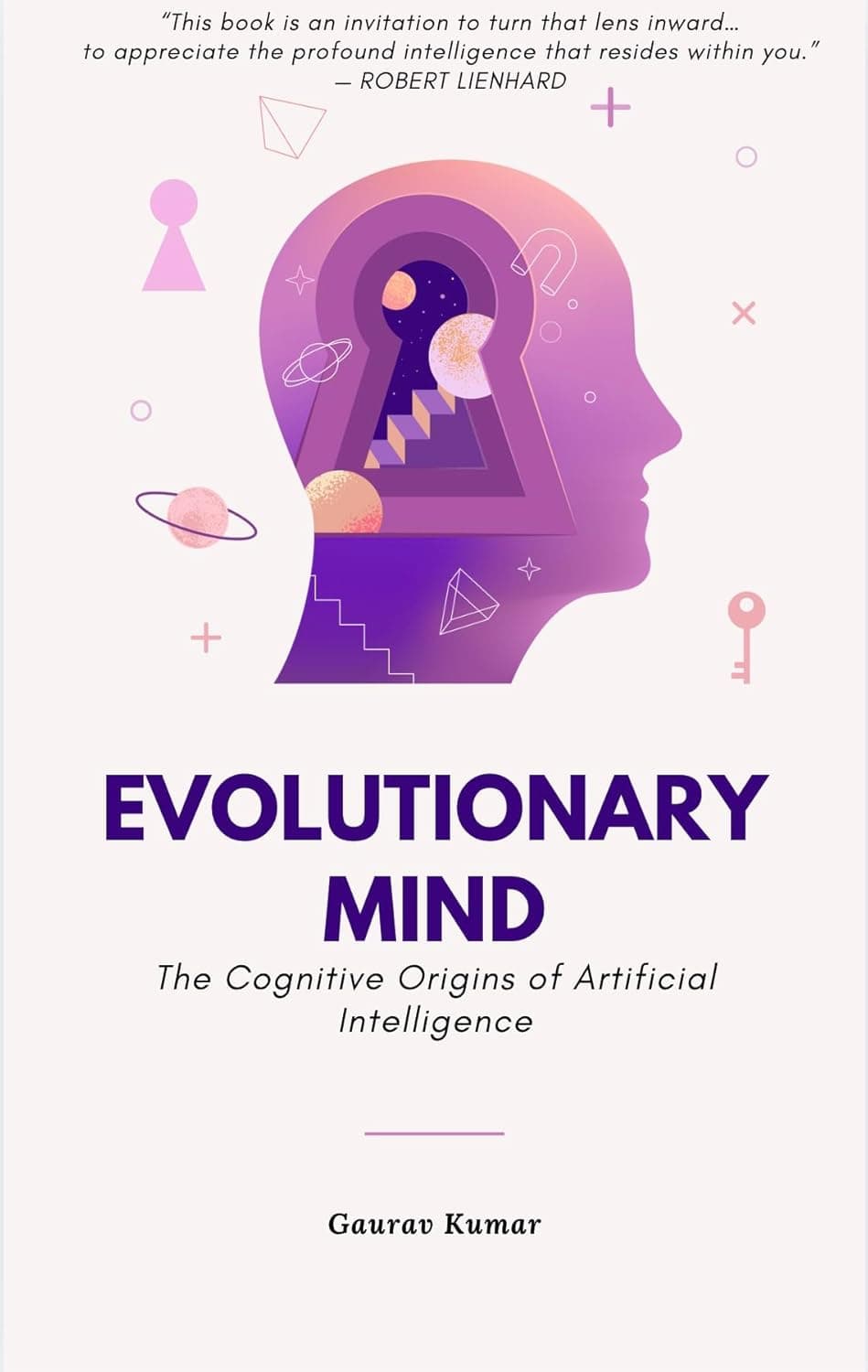
Evolutionary Mind
A book examining the cognitive foundations of artificial intelligence — exploring how layers of human cognition relate to machine reasoning, and where structural limits emerge.
arXiv • cs.AI
Research Paper • arXiv (cs.AI, 2025)
Model-First Reasoning
A structured methodology for agent-based AI systems that emphasizes explicit problem modeling before generation — improving reliability and reducing hallucination risk in complex workflows.
Read on arXiv →Research sharpens architectural thinking.
Architecture validates research in production.
Philosophy
Principles & Perspectives
Good AI architecture requires more than technical skill — it requires a point of view on intelligence itself. These are the principles and cross-disciplinary perspectives that shape how I design, evaluate, and govern AI systems.
Guiding Principles
Technology Serves Humanity
The ultimate measure of any AI system is not its technical sophistication, but whether it genuinely improves human outcomes and preserves human agency. Architecture decisions should always begin with this test.
Think in Systems, Act with Empathy
Great architecture requires both rigorous systems thinking and deep empathy for the people who build on it and the people it serves. The systems we design should reflect that interconnectedness.
Question Assumptions, Build with Conviction
The habit of questioning defaults — why this pattern, why this trade-off, why this boundary — is the most valuable tool in an architect's toolkit. But once clarity emerges, build with full conviction.
Cross-Disciplinary Perspectives
Each perspective offers a different lens on intelligence and reasoning — and each has directly influenced how I architect AI systems in production.
Cognitive Science
Daniel Kahneman, Marvin Minsky
Kahneman's dual-process theory (System 1 & 2) and Minsky's Society of Mind offer practical frameworks for understanding why AI excels at pattern recognition yet struggles with meaning — directly shaping how I design evaluation layers and human-in-the-loop boundaries.
Integral Philosophy
Sri Aurobindo
The six layers of mind in Evolutionary Mind — Sensing, Thinking, Reasoning, Witnessing, Higher, and Intuitive consciousness — map to ascending capabilities in AI systems. Current AI mirrors the lower layers; the higher ones define where human oversight remains essential.
Western Philosophy of Mind
Aristotle, Descartes, Turing
From Aristotle's formal logic to Turing's computational theory of mind — this tradition provides the foundations on which AI was built, and understanding those foundations clarifies where current architectures hit structural limits.
Cognitive Architecture
Douglas Hofstadter, Allen Newell
Hofstadter's work on self-reference and Newell's unified theories of cognition inform how I think about agent-based systems — particularly the boundaries between structured reasoning and emergent behavior.
Connect
Let's Connect
I'm interested in conversations around AI systems architecture, production reliability, and the long-term design of intelligent platforms.
If you're working on complex AI systems — particularly where data infrastructure, agent workflows, and governance intersect — I'm open to connecting and exchanging ideas.